
Who Wants to Shine?
SUPER MARIO BROS. SPECIAL
HUDSON SOFT’S FORGOTTEN MASTERPIECE?
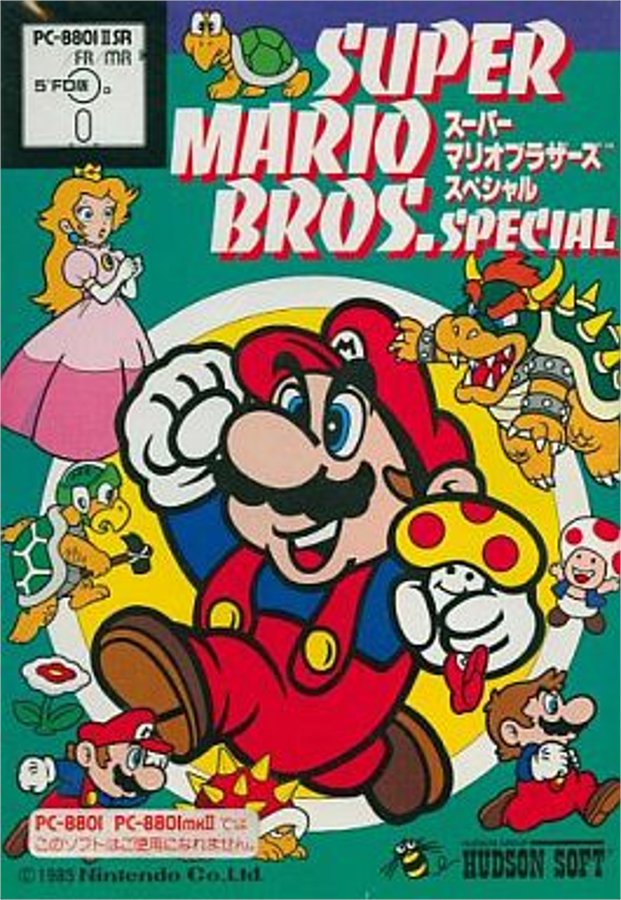
If the arcade version of Mario Bros. was a rough sketch, then Super Mario Bros. on the Famicom was a definitive masterpiece. To this day, few players would tolerate the alteration of a single pixel of that legacy. A lot of water has gone under the bridge since the eighties, particularly the bridges leading to Nintendo’s Kyoto headquarters. While touching the Mario formula today seems unthinkable, back in 1985 and 1986, the door was briefly left ajar. Following their "Special" rendition of the original Mario Bros., Hudson Soft returned to the well, once again with the blessing of the Big N. There was no need to look far for a title; Super Mario carried enough weight on its own. Hudson’s logic was simple: take the concept to its limit and create another "Special" edition.
However, there is a vast gulf between a concept and its execution, and an even wider one between commercial success and critical esteem. As we shall see, Hudson developed a product of genuine quality that nonetheless suffers from a dubious reputation, largely perpetuated by those who have never actually played it.
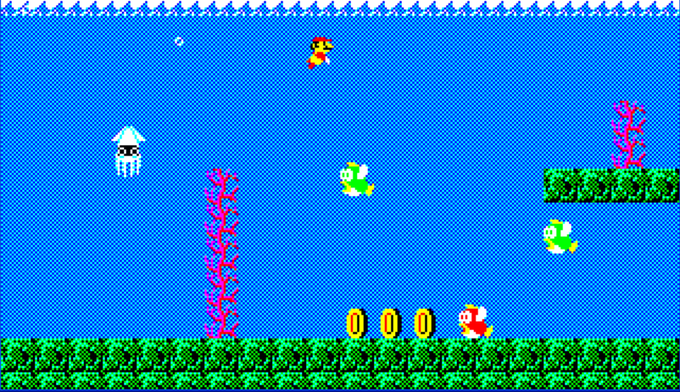
▲ Super Mario Bros Special Hudson Soft screen 1
What exactly defined a "Special" episode for Hudson? Essentially, it was a title where enough aspects were modified to justify a new purchase without quite crossing the threshold into a true sequel. This was achieved through two main pillars: a complete difficulty overhaul and various new content additions.
The difficulty rebalancing was the most significant undertaking. The goal was to deliver a title calibrated for the microcomputer audience rather than console gamers, without stripping away the soul of the original work. This, combined with Nintendo reserving the Famicom/NES license for its in-house teams, is likely why these third-party titles were restricted to platforms that didn't compete directly with the flagship console: Japanese PCs, specifically the NEC PC-8801 and the Sharp X1.
A Bold Re-orchestration of World Layout
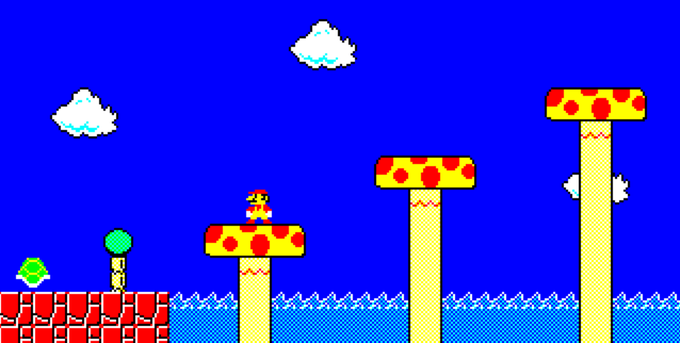
▲ Super Mario Bros Special Hudson Soft screen 2
How did Hudson pull it off? The gamble was bold, though perhaps not as extreme as Nintendo’s own The Lost Levels. On PC, Super Mario occupies environments that feel visually consistent with the Famicom version but are structurally unrecognizable. New platforms appear where others have vanished; pipes lead to entirely new destinations. The layout of the world was masterfully re-orchestrated to test a player’s reflexes and jumping precision anew.
Let’s set the record straight: the level design modifications are so tight they could have been penned by Shigeru Miyamoto himself. The player is never subjected to artificial difficulty spikes, nor is it a walk in the park. The challenge is omnipresent, maintained with the same surgical precision as the original. Some elements even foreshadowed what Nintendo would later implement in The Lost Levels—specifically the final worlds and their labyrinthine pipes that loop players back to previous sections. This innovation belongs to Hudson; it wasn't a Miyamoto invention. When you factor in the revised enemy patterns, fire bars, and shortcuts, the result is an entirely new game in terms of both flow and progression.
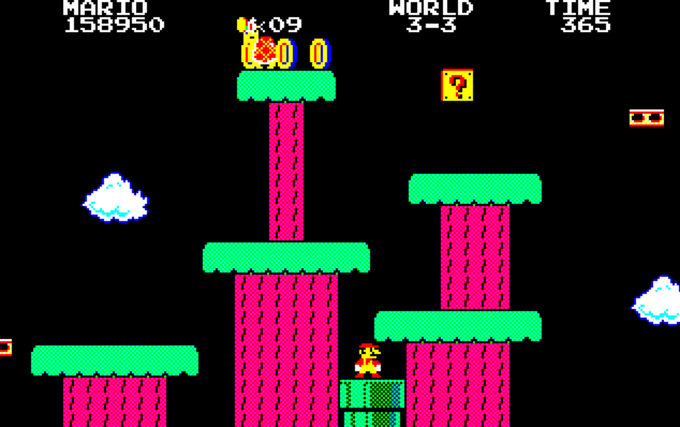
▲ Super Mario Bros Special Hudson Soft screen 3
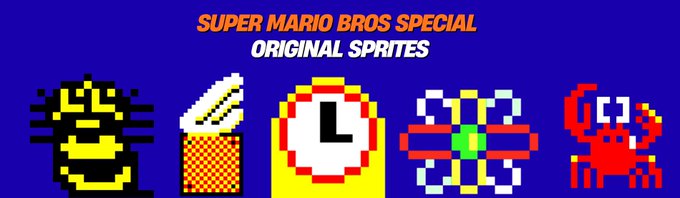
Hudson also excelled in the finer details, including cameos and references to other titles long before Nintendo made it a habit. These additions fall into three categories: items, enemy sprites, and environmental hazards. With five new items and five new enemies, these ten additions prove this was a conscientious labor of love rather than a cynical cash grab.
The new items are less about fundamental gameplay and more about rewarding the completionist, as most are hidden in invisible blocks. Players can find the Hudson Bee (worth 8,000 points); a Watch that adds 100 seconds to the timer (which ticks down much faster in this version); the Hammer from Donkey Kong for smashing barrels; a Nuke/Atom that acts as a POW block, clearing the screen; and finally, a pair of Wings. This last item is the most intriguing, allowing Mario to "fly", or rather, swim through the air, using the swimming animation cycles. It is highly probable that this served as the spark of inspiration for Mario’s flight mechanics in Super Mario Bros. 3.
On the bestiary side, the Donkey Kong and Mario Bros. arcade roots are showing. Beyond the breakable barrels, players face the living flames (Fireballs) from DK’s oil drums, as well as the Crabs (Sidesteppers) and Flies (Fighter Flies) from Mario’s plumbing days. These inclusions are more than just fan service; they add mechanical depth, forcing players to adapt their strategies. While some argue that the falling icicles are "enemies," their lack of faces in this version suggests they are strictly environmental hazards, distinct from the sentient icicles seen in the arcade.
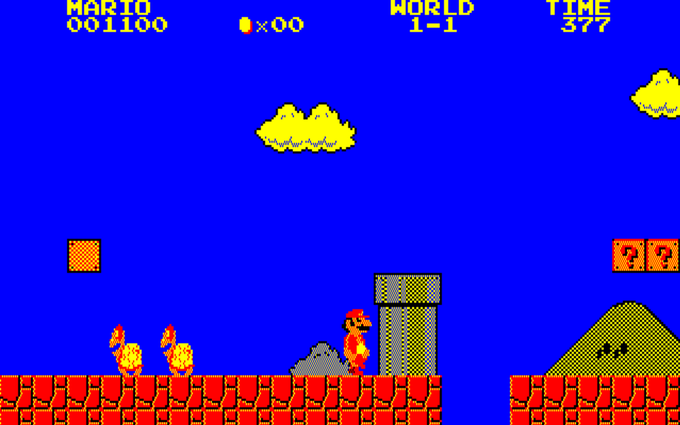
▲ Super Mario Bros Special Hudson Soft screen 4
If the package is so appetizing, why is it so often maligned? The answer lies in the hardware limitations of the era. The PC-8801 and Sharp X1 were, in certain respects, less capable than the Famicom, necessitating technical concessions. The most glaring was the removal of smooth scrolling.
On the Sharp X1, the screen doesn't follow Mario; instead, when the player reaches the edge, the game freezes momentarily to "flip" to the next screen. It’s a minor hiccup that players can adjust to in minutes. The PC-8801 version, however, is far more jarring. It uses the same flip-screen method, but instead of a quick transition, the screen goes entirely black for a significant delay. While the Sharp X1 manages to feel like a single-screen platformer, the PC-8801 version falters, putting its technical weaknesses on full display. Unfortunately, the PC-8801 version is the one most commonly encountered today, leading many to dismiss Special as a "misfire."
This reputation is further soured by the PC-88’s graphical woes. Sprites are poorly defined and often bleed into the background—yellow Koopa shells, for instance, are nearly invisible against the yellow hills. Conversely, the Sharp X1 version features crisp, vibrant sprites and distinct backgrounds, drastically improving playability. Super Mario Bros. Special isn't a bad game; it simply suffered from a bad port on NEC’s hardware.
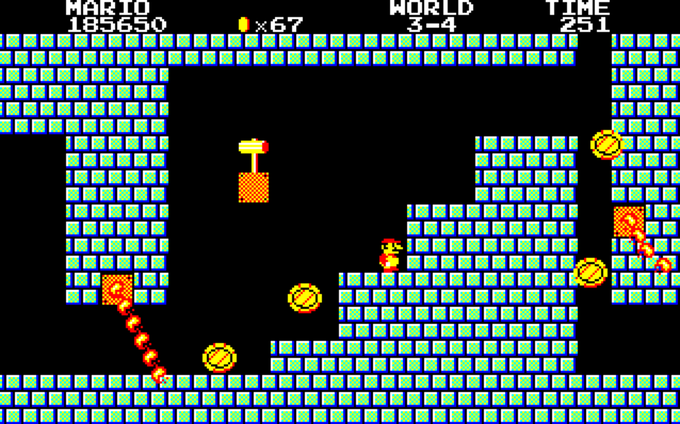
▲ Super Mario Bros Special Hudson Soft screen 5
Beyond the visuals, the Sharp X1 offers superior "game feel." Running and jumping are intuitive, mirroring Miyamoto’s original physics. Both PC versions struggle slightly with mid-air directional changes during vertical jumps, making precise platforming and climbing vines more difficult. However, this feels intentional when balanced against the absence of Warp Zones and the presence of intricate, platform-heavy mazes that demand total aerial mastery.
Historically, Super Mario Bros. Special is a symptom of an era before Nintendo became the overprotective gatekeeper of its IP. It was a time of burgeoning success where the firm was willing to entrust its crown jewels to third parties. While this specific experiment was a success of design, later attempts—like the infamous Zelda CD-i titles—were catastrophic.
Times have changed. While Nintendo rarely "shares" anymore, echoes of this era remain. The recent partnership with Koei Tecmo for Hyrule Warriors surprised many. The difference? Nintendo claims their partners had "total freedom," but the reality is simpler: the Musou formula is a proven winner, and trusting a renowned team with a spin-off was a calculated, zero-risk move. This time, Nintendo used the partner, not the other way around. The bridge to Kyoto is now a one-way street.
THE END